
















Lisle cotton, cotton, merino wool: which sock material should you choose?
Lisle, cotton or merino wool: behind a pair of socks, the choice of material changes a lot. The feel, of course, but also the fineness of the knit, the warmth, the breathability or even the look once worn.
Some materials lend themselves readily to everyday wear, while others are better suited to dress shoes or the colder days.
So, which sock material should you choose? A little guide to finding the right pair at the right time.
Why is the material of a sock important?
We often choose our socks for their color or pattern. Yet, the material deserves just as much attention.
It directly influences the sensation on the foot, the thickness of the sock and its ability to adapt to temperature changes. It also affects its appearance: a fine knit in lisle obviously tells a different story than a pair in merino wool worn with ankle boots.
At Maison Broussaud, the choice of yarns is an integral part of the creation of each model. Cotton, lisle and merino wool are thus selected according to the use, the season and the desired result.
Why choose cotton socks?
They are the essential of the sock drawer.
Soft, breathable and comfortable to wear, cotton is particularly well suited for everyday use. It allows for the creation of comfortable and easy-to-match socks, whether with sneakers or with loafers or dress shoes.
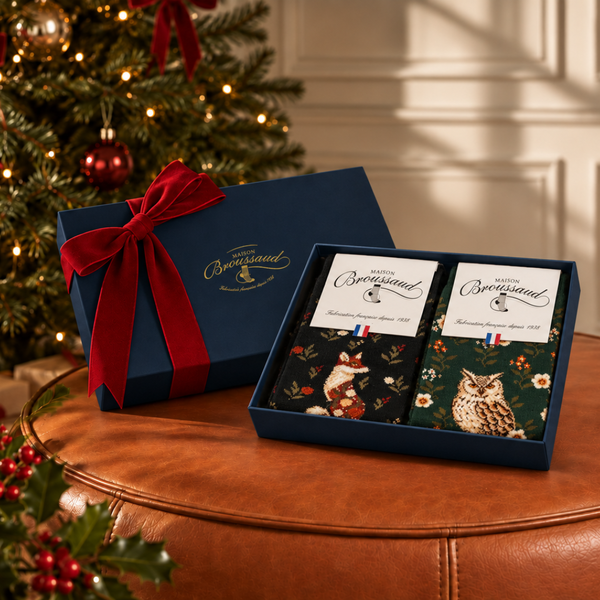
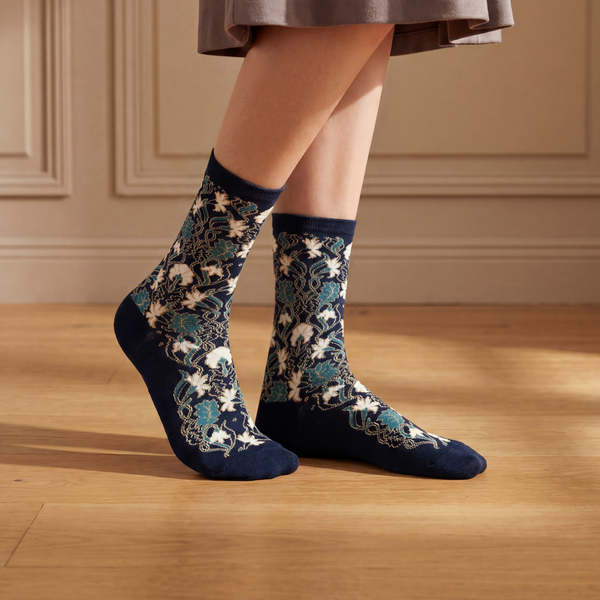
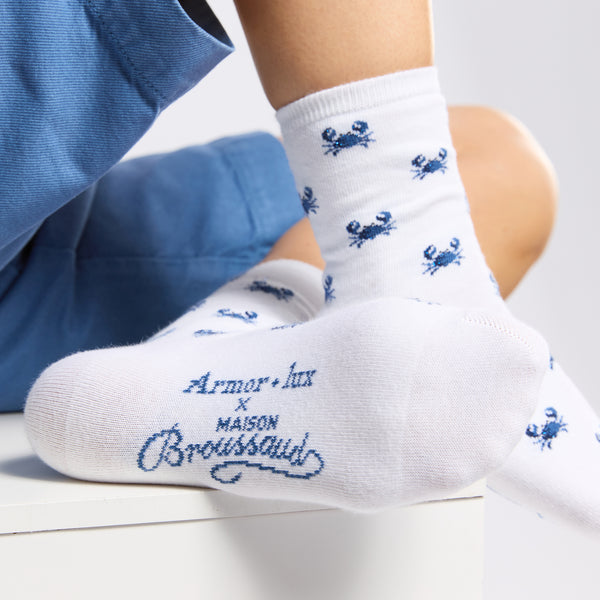
It is also a material that lends itself particularly well to color and patterns. Foxes, flowers, stripes, tartans or more graphic designs: cotton forms the basis of many Maison Broussaud creations.

Cotton socks are ideal if you are looking for:
- a comfortable pair for everyday wear;
- a soft and breathable material;
- socks that are easy to wear for much of the year;
- a wide choice of colors and patterns.
They are somehow the material of everyday life, the one you choose in the morning without having to think about it.
What is lisle?
Despite its name, lisle is not a different material from cotton. It is cotton that has undergone a treatment called mercerization, which changes the appearance and properties of the yarn.
The result? A smoother, shinier yarn that is particularly suited for making fine socks.
The difference is noticeable both to the touch and to the eye. The knit is sharper and its slightly satin finish provides a particularly elegant look.
This is why lisle has historically been associated with dress socks.
When to wear lisle socks?
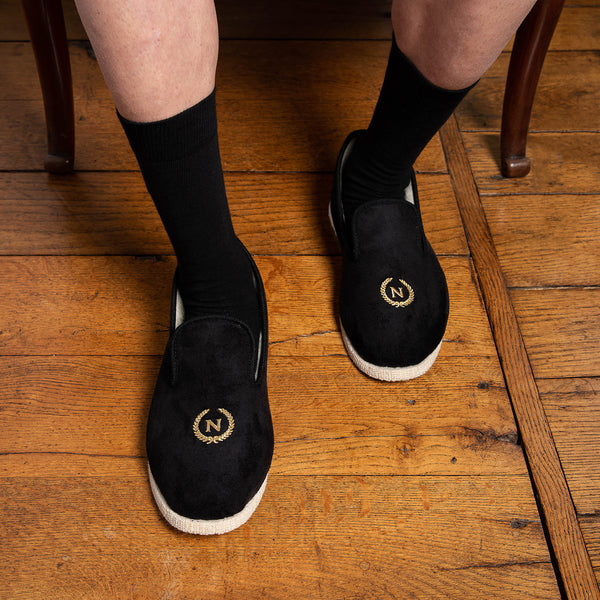
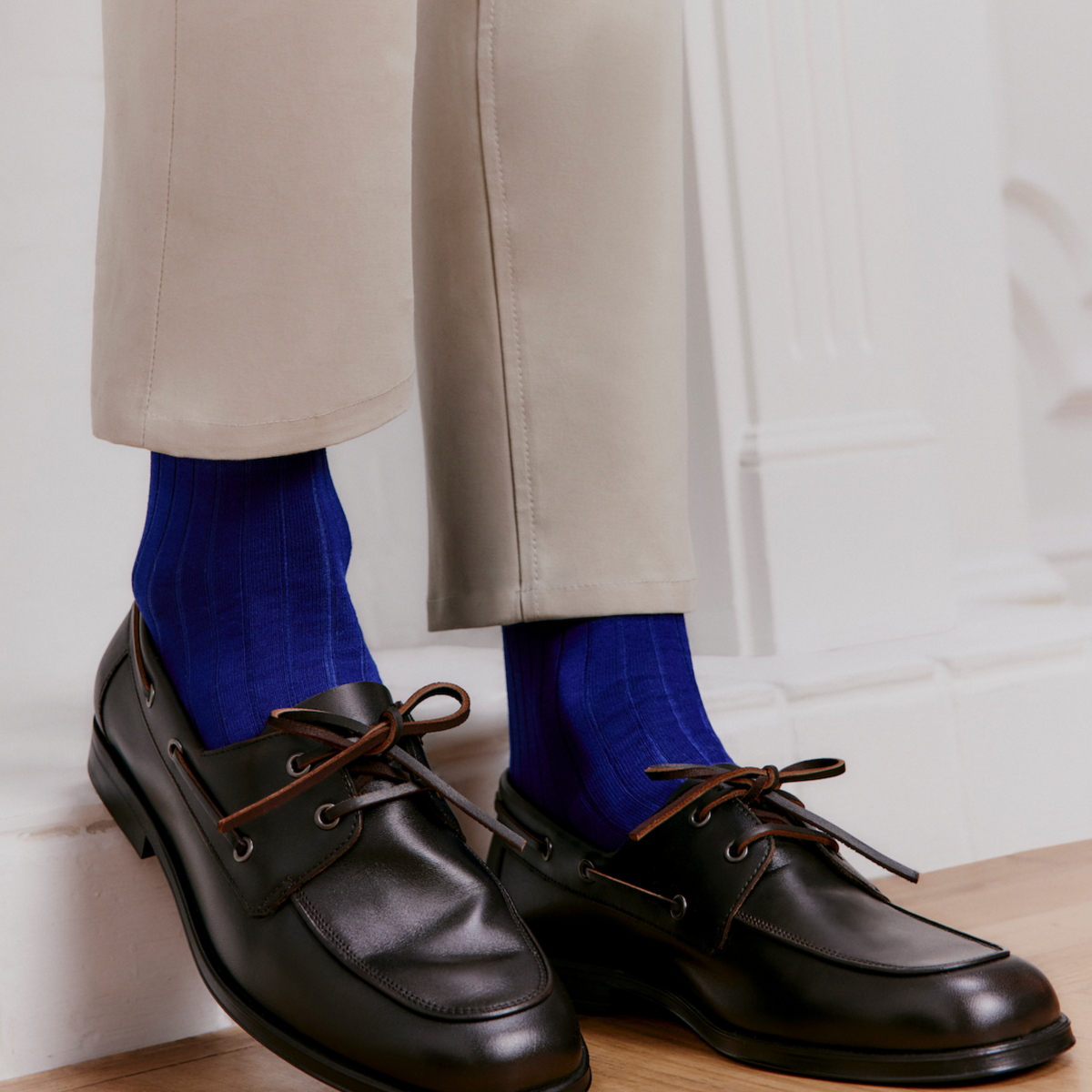
Lisle naturally finds its place with a suit, well-tailored trousers, derbies or loafers.
Its fineness allows the sock to blend into a dress shoe, while providing a polished finish to the silhouette.
Black, navy or chocolate: classic shades allow you to stay within the codes of formal wear. But nothing stops you from playing with color when the outfit calls for it.
Choose lisle if you are looking for:
- a fine sock;
- an elegant look;
- a smooth and neat knit;
- a pair to wear with dress shoes;
- a more refined alternative to the classic cotton sock.
An essential of the men's wardrobe, but not only.
Why choose merino wool socks?
When temperatures drop, merino wool naturally takes over.
Coming from the merino sheep, this wool is appreciated for the fineness of its fibers and its thermoregulating properties. It helps retain heat when it is cold while allowing for good moisture management.
Contrary to the image sometimes associated with thick wool socks, a pair in merino can remain fine, supple and elegant.
It thus accompanies both a winter walk and a day in the city.
At Maison Broussaud, we particularly love working with merino wool in deep and natural shades: navy, ecru, khaki, burgundy or black. Colors that easily find their place in the fall-winter wardrobe.
Does merino wool itch?
This is one of the questions that often comes up when it comes to wool socks.
Merino wool has particularly fine fibers, which gives it a much softer feel than some traditional wools. It is therefore particularly appreciated for clothing worn directly against the skin.
Good news for those who love the warmth of wool, but much less so for memories of itchy sweaters.
Which material to choose according to the season?
There is no need to choose your side definitively.
In spring and summer, cotton or lisle socks allow you to prioritize fineness and breathability.
In autumn, cotton remains perfectly suited while merino wool begins to find its place in the wardrobe.
In winter, merino becomes particularly interesting for retaining more heat, especially with ankle boots or leather shoes.
Lisle, on the other hand, crosses seasons whenever an outfit calls for a finer and dressier sock.
Cotton, lisle or merino: what to choose?
It all depends on the occasion in the end.
For everyday: cotton.
Soft, comfortable and easy to wear, it accompanies both solid models and novelty socks.
For an elegant outfit: lisle.
Finer and slightly shiny, it naturally finds its place with loafers, derbies and dress shoes.
For chilly days: merino wool.
Soft and thermoregulating, it provides warmth without necessarily adding bulk.
And because a week can start in sneakers, continue in loafers and end with a walk in the countryside, the simplest thing is still to have all three.
Yarns selected right up to our workshop in Limousin
A sock always starts with a yarn.
Its material, its thickness, its color and the way it reacts on the loom contribute to the final result as much as the design itself.
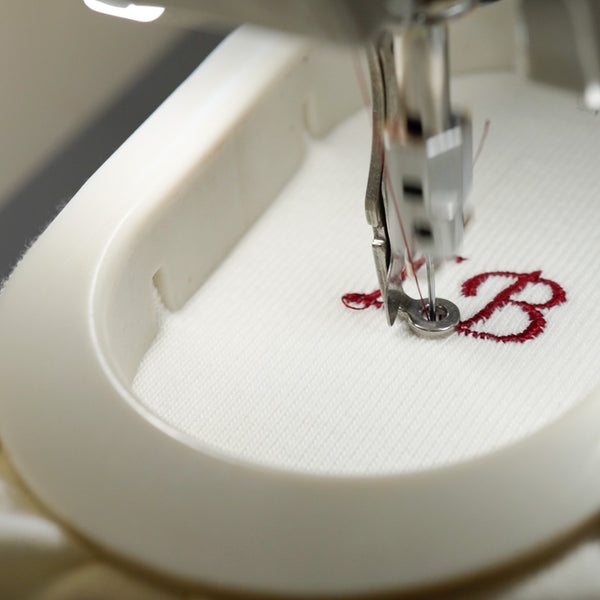
Since 1938, Maison Broussaud has cultivated this know-how in its workshop in Les Cars, in Haute-Vienne. Our collections are designed and then knitted in France, choosing the materials according to the look and use we want to give to each model.
From the colored cotton of our novelty socks to the fineness of lisle, and the warmth of merino wool, each yarn has its story and its place in the wardrobe.


